I’ll create a blog post about creating a contingency table in Excel following the specified requirements:
Data analysis is a crucial skill in today’s data-driven world, and creating a contingency table in Excel is an essential technique for understanding relationships between categorical variables. Whether you’re a student, researcher, or professional, mastering this skill can help you uncover valuable insights from your data quickly and efficiently.
Understanding Contingency Tables

A contingency table, also known as a cross-tabulation or crosstab, is a method of summarizing the relationship between two categorical variables. It displays the frequency distribution of observations across different categories, allowing you to visualize and analyze patterns in your data.
Preparing Your Data

Before creating a contingency table in Excel, you’ll need to ensure your data is properly organized:
- Arrange your data in a clean, structured spreadsheet
- Ensure categorical variables are clearly defined
- Remove any unnecessary formatting or blank rows
Step-by-Step Guide to Creating a Contingency Table

Step 1: Select Your Data
Begin by highlighting the entire range of data you want to include in your contingency table. Ensure your columns represent the categorical variables you wish to analyze.
Step 2: Use Pivot Table Feature

Excel’s Pivot Table feature is the most efficient way to create a contingency table:
- Navigate to the Insert tab
- Click on PivotTable
- Select your data range
- Choose where to place the PivotTable (new worksheet recommended)
Step 3: Configure the Pivot Table

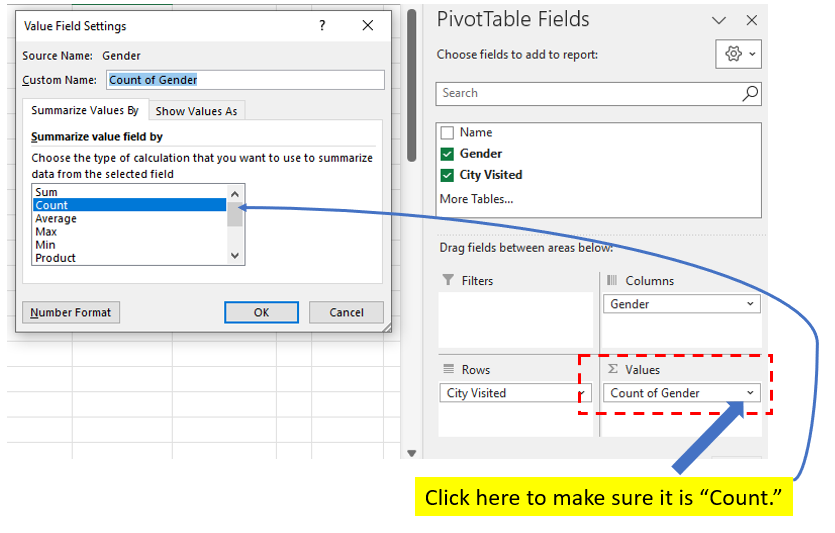
In the PivotTable Fields panel:
- Drag one categorical variable to Rows
- Drag the second categorical variable to Columns
- Place the count or value field in the Values area
Step 4: Customize Your Table

Enhance your contingency table by:
- Adjusting column widths
- Formatting numbers
- Adding conditional formatting for better visualization
📊 Note: Always double-check your data to ensure accuracy in your contingency table.
Interpreting Your Contingency Table

A well-created contingency table allows you to:
- Identify relationships between variables
- Perform statistical tests like chi-square
- Visualize data distributions
The power of a contingency table lies in its ability to transform raw data into meaningful insights. By understanding the relationships between categorical variables, you can make more informed decisions and uncover hidden patterns in your data.
What is a contingency table?

+
A contingency table is a statistical tool that shows the frequency distribution of observations across two categorical variables, helping to analyze their relationship.
Can I create a contingency table with more than two variables?
+
While basic contingency tables work with two variables, Excel’s PivotTables allow you to create more complex multi-dimensional tables by adding more fields.
How accurate are contingency tables?
+
The accuracy depends on your input data. Always ensure your data is clean, properly categorized, and free from errors before creating the table.